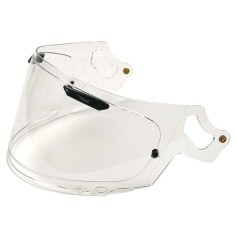





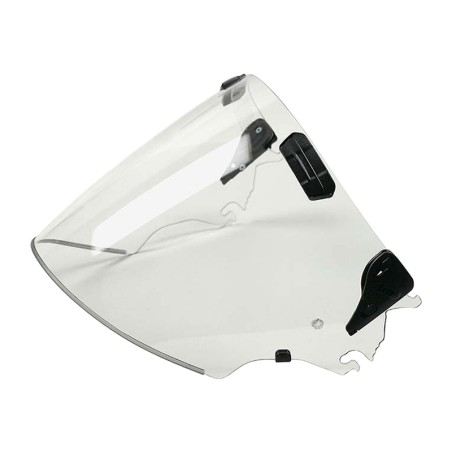


ARAI VAS-Z Pro Shade Ready Shield
€89.95
€74.34 Tax excluded
Arai helmet shield with Pro Shade system against sun glare for all weather conditions
VAS Visor System
Impact energy can be reduced if the head is able to keep moving.
It can be divided, in basic terms, into three components: scalp, skull and brain. The function of a motorcycle helmet is to minimise and control the impacts suffered by the brain. Laboratory test standards vary in certain respects, but in general they all define impact absorption levels. These levels are tested by dropping a helmet, with a steel head form inside, from a predetermined height onto a steel anvil. Accelerometers located inside the head form measure the forces sustained in these drop impacts to verify impact absorption performance. Standards such as Snell set fairly high test criteria for certification approval to be granted.
In an impact, the helmet acts as a shock absorber: the outer shell deflects the energy and the inner liner absorbs energy as it crushes, slowing down the speed of the impact. Examining the results obtained in impact energy control under the standard shows large differences compared with a real accident, which takes place in a demanding and unpredictable environment.
The kinetic energy of a moving object increases in proportion to the square of its speed. Therefore, an urban rider travelling at the legal speed limit can have 10 times more kinetic energy than that corresponding to the speed of a drop test. No helmet, regardless of brand or design, can be expected to directly absorb such energies.
Arai therefore considers that "deflection" performance must be important in order to deflect energy while keeping the head moving. For potential impacts with energies above those of the standards, and even above those a helmet may be able to absorb directly, Arai has always, throughout its history, sought to make helmets that are rounder, smoother and stronger.
However, even at Arai, there are limits to how smooth and rounded a helmet can be because of the restrictions of its single-pivot shield mechanism. The geometry of current shield systems requires a high pivot position. This high pivot point falls within the test area of the standard, crossing the standard's boundary lines in the left and right temple areas.
The shield is attached to the helmet by means of a support and pivot mechanism. To preserve a smooth, level transition between shield and shell, the area of the shell where this mechanism is attached must have a recessed area or a hollow. Current shield systems, with part of the mechanism inside the test area, make it impossible to maintain a curved, smooth and continuous shell surface.
PSS (Pro Shade System)
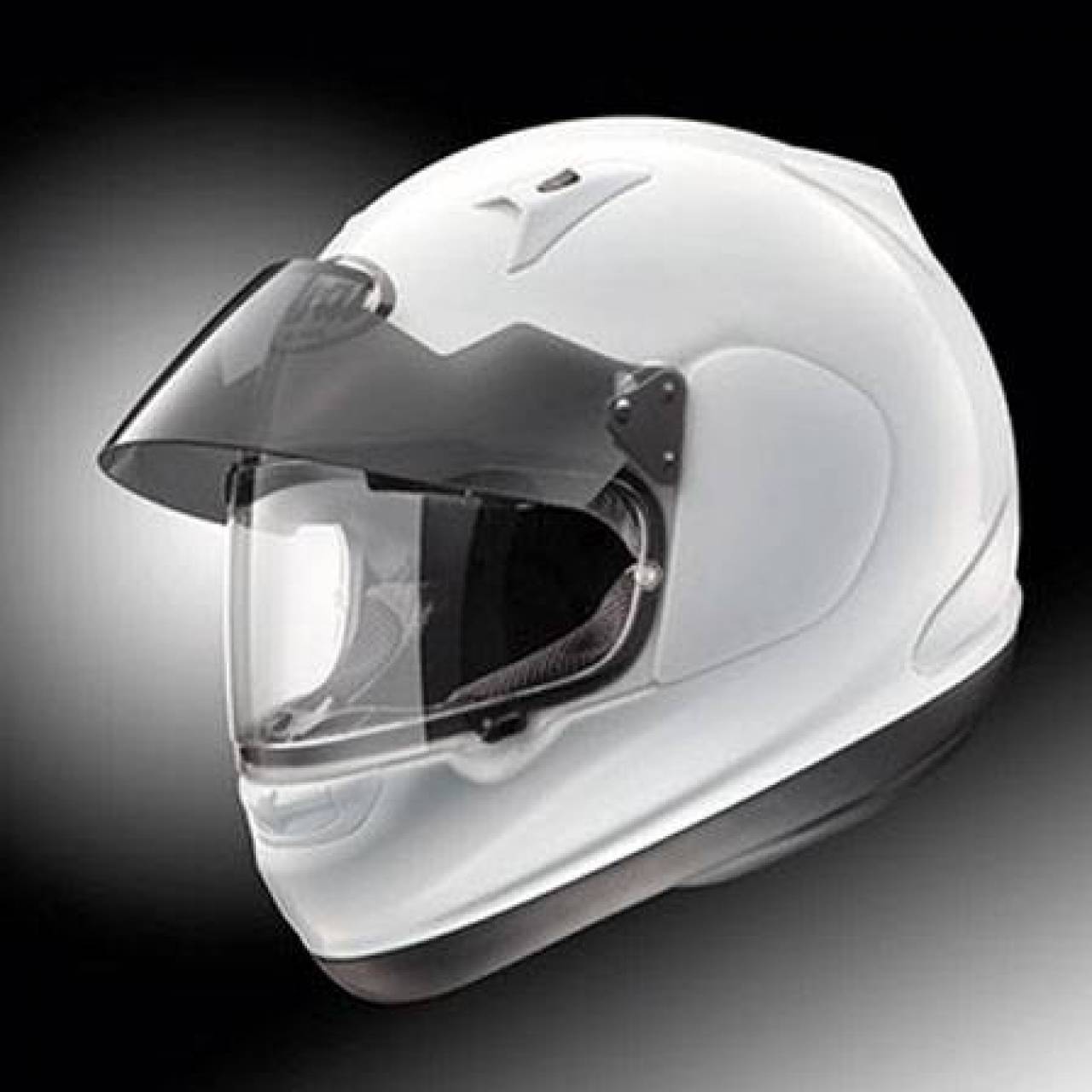
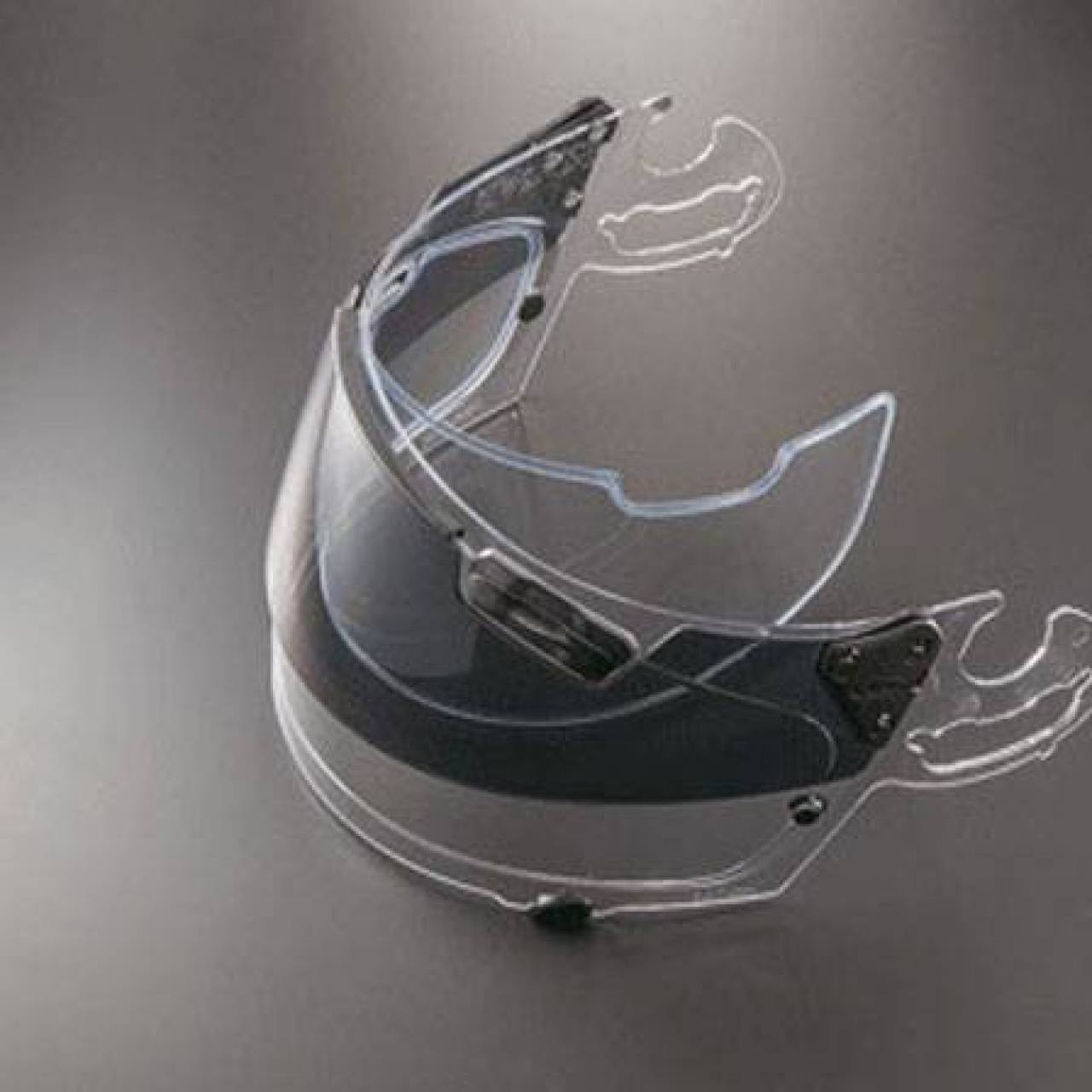
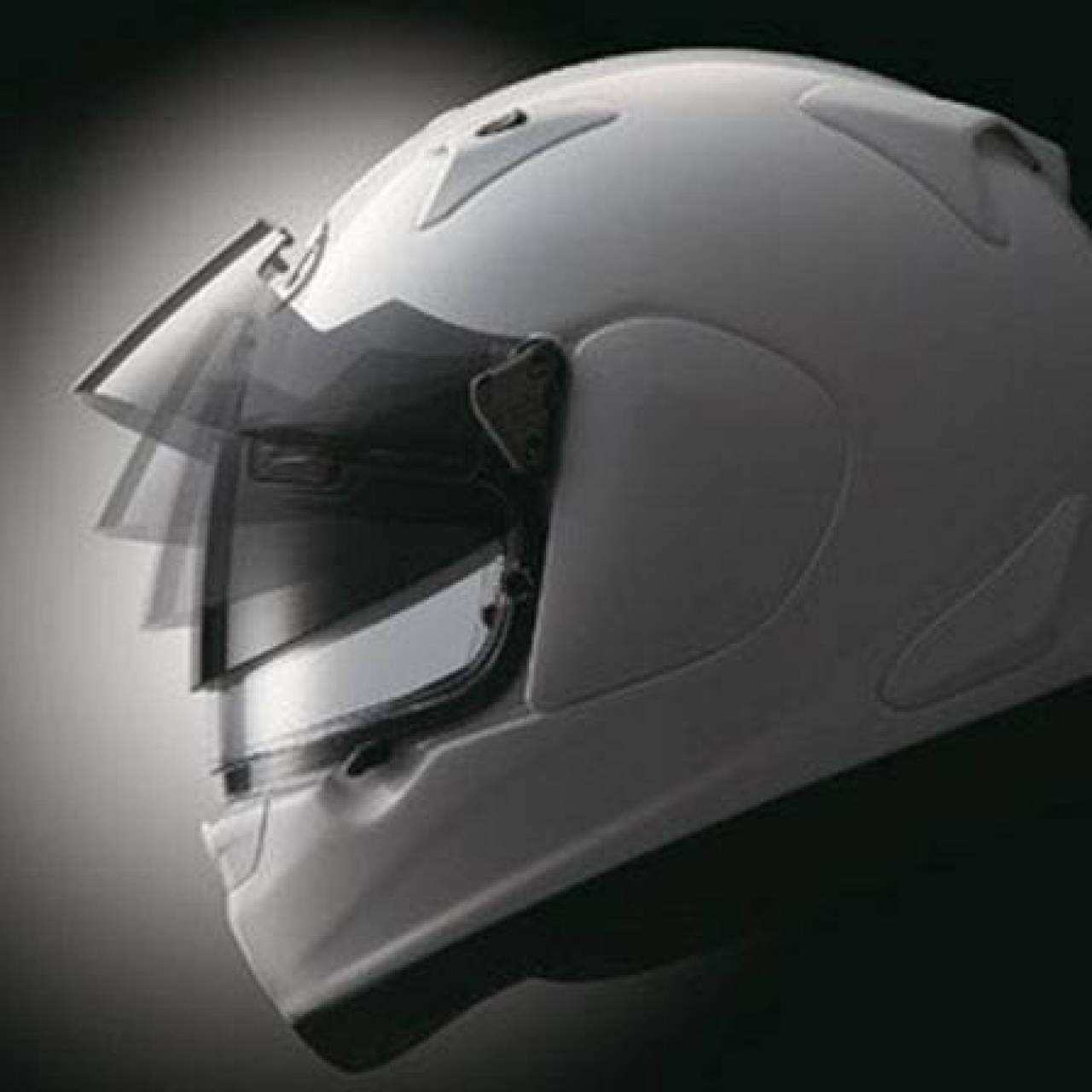
An excellent example of Arai's vision in terms of protection and safety is the development of the PSS, the Pro Shade System. An intelligent drop-down sun peak system, combined with the famous wide Max Vision shield with optional Pinlock.
It is the all-weather solution that protects against sun glare, fogging and moisture. The sun visor is raised and lowered with a quick twist of the hand, and stays fixed in position. However, a very common question is why Arai has not used an integrated sun visor. There are three good reasons for not using an integrated sun visor:
- No reduction in the thickness of the inner EPS liner is required. When the visor is integrated, the space for it is created by making the EPS liner thinner.
- They do not affect the integrity of the outer shell because of the air gap required for an integrated visor and the lack of bonding between the outer shell and the inner EPS liner.
- No operating mechanism is needed. The operating system would also require space, reducing the EPS liner even further. It also often includes metal parts inside the EPS liner, which can be dangerous in the event of an impact.
 |
 |
 |
How does the PSS system work when the helmet is in use?
When lowered, the visor effectively works as a sun visor. There is no need to change shields when the sun gets lower, so there is no need to carry additional shields, and you can switch quickly between the sun visor and clear visor functions, which is especially practical when riding through a tunnel or underpass. The PSS system is a complete package consisting of the sun peak, the Max Vision shield and the Pinlock anti-fog insert lens. It is the genuine solution for riding in all kinds of weather conditions, offering equal protection against glare and fogging. The PSS system has been thoroughly tested in the wind tunnel and in real conditions in European weather and road circumstances. During these tests it was shown that the PSS system did not increase wind noise and did not cause any kind of buffeting on the helmet, even at high speeds.
But the ingenious PSS system offers additional advantages that no internal visor can provide. With the visor in the raised position it works as a peak. The locking mechanism holds the peak in position. This filters the glare caused by the sun. (Image 1)
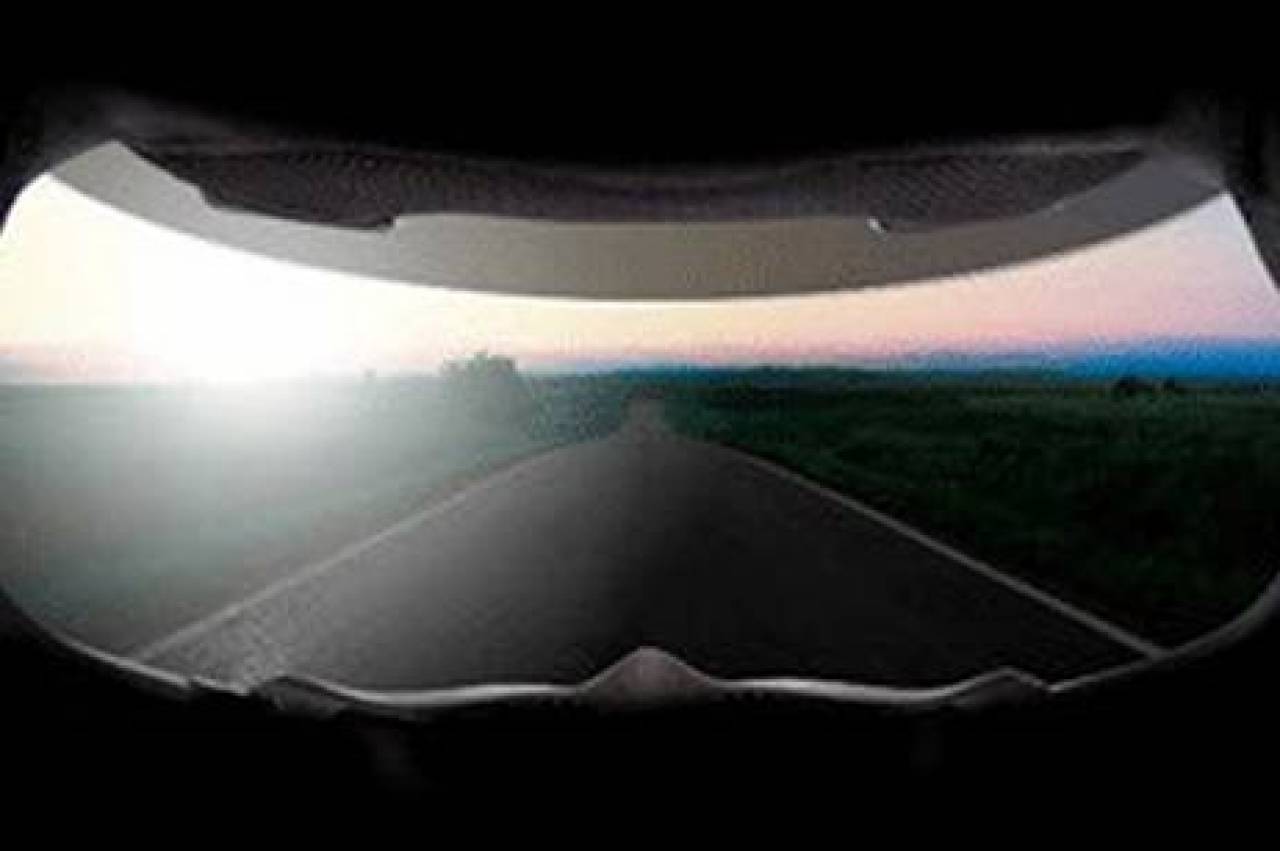
When the sun is low, a slight tilt of the head is enough to reduce the intensity of the ambient light. The PSS system will not block the entire field of vision, only the part that causes glare. You still enjoy a clear view through the clear shield. (Image 2)
 |
 |
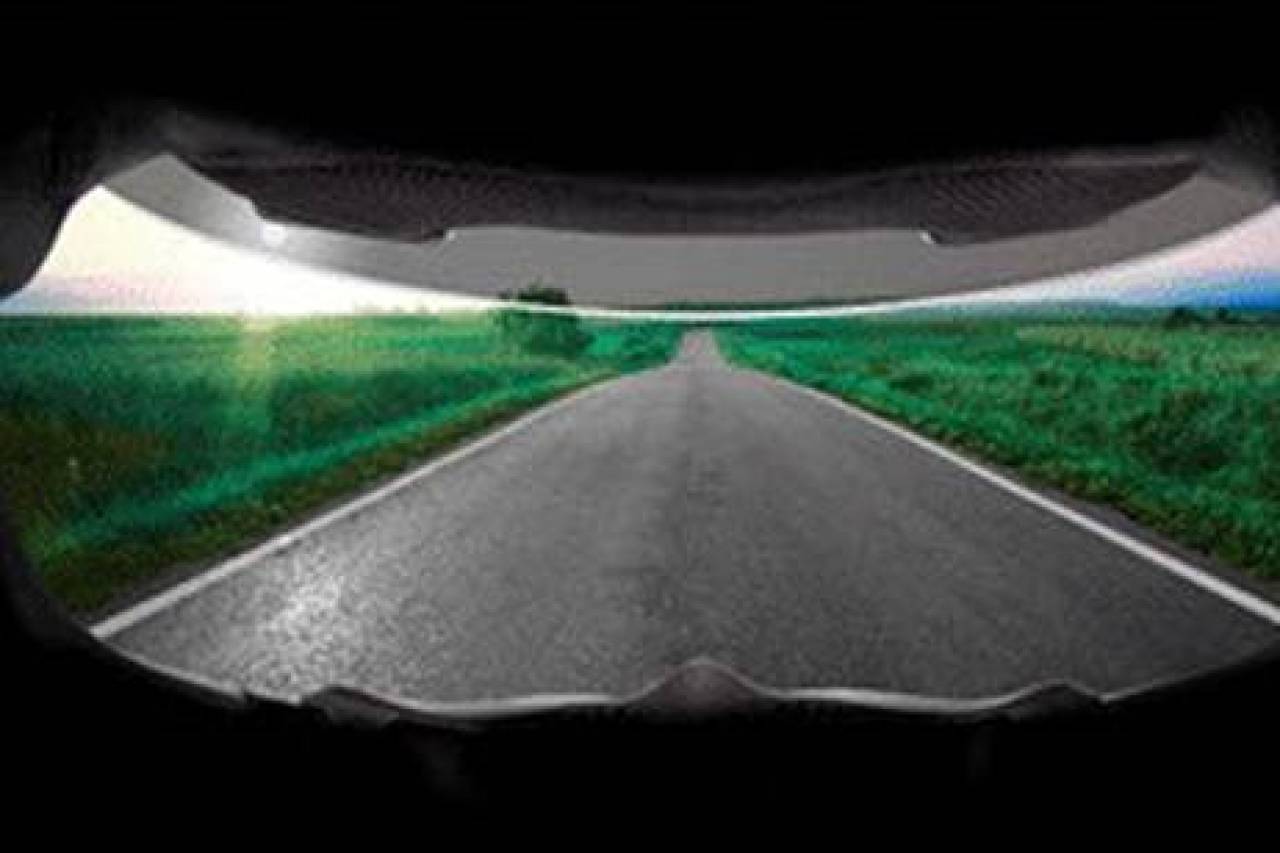 |
You can compare it with a car sun visor, except that the PSS system works much faster. All that is needed is a tilt of the head. There is no need to take a hand off the handlebar to operate a lever or button. Riders' visibility is not blocked by a full sun visor, as the clear part offers a sharp view of the road. The PSS system eliminates glare, not the view of the road or the traffic. An additional advantage offered by Arai's PSS system, and which no common internal drop-down design can provide, is that, when raised, it works even at night, effectively preventing the glare that urban lights could cause.
- Brand
- Arai
- Reference
- 55031025
- ean13
- 4530935539321